

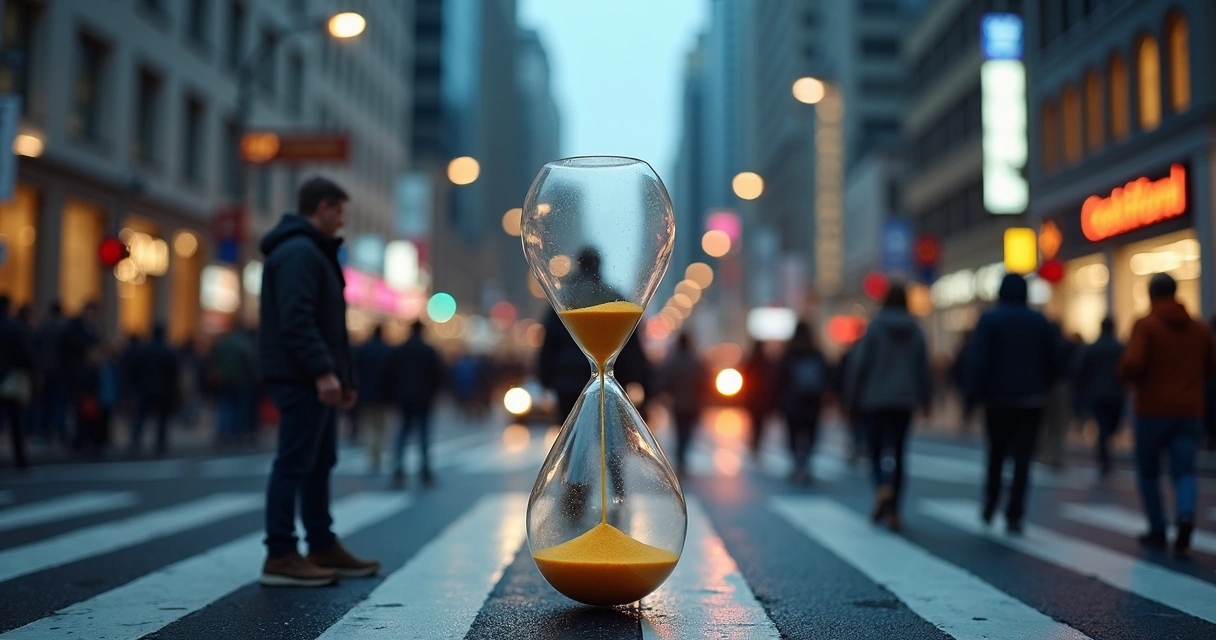
We often say we want lasting change, yet many of us feel upset when it does not arrive fast. We start a new habit, a healing process, or a life shift with hope. Then a week passes. Maybe a month. The outside result is still small. The mind begins to tighten. We ask, “Why am I still here?” That question carries more pain than it seems.
Impatience is not just a dislike of waiting. It is often a reaction to fear, uncertainty, and the wish to feel safe again.
In our experience, slow growth feels hard to bear because it asks something many people were never taught to give. Steady trust. Not blind trust, but grounded trust built through repetition, reflection, and time. Growth asks us to act before we feel rewarded. That is where impatience starts to rise.
Why the mind resists slow change
The human mind likes signs of progress. It wants proof that effort means something. When that proof is delayed, the mind may read the delay as danger, failure, or wasted energy. We have seen this in personal routines, emotional healing, and learning. The pattern is common. If the result is not visible, motivation starts to shake.
Part of this is tied to how we value the present over the future. Research in a large U.S. sample study on delay discounting and mental health symptoms found that a stronger pull toward immediate rewards was linked, even if modestly, with higher symptoms of anxiety, depression, PTSD, and problematic substance use. This does not mean impatience causes every struggle. But it shows that difficulty waiting can sit close to emotional distress.
Slow change can feel unsafe.
That is why growth can become emotionally heavy. If we already feel tired, worried, or discouraged, waiting becomes even harder. The future reward loses force. The present discomfort becomes louder.
The deeper roots of impatience
Impatience has more than one cause. It usually grows from a mix of emotional history, body tension, social pressure, and inner beliefs. When we look closely, we often find roots like these:
Fear of being left behind by others.
A habit of linking worth to visible results.
Emotional fatigue from carrying too much for too long.
Past experiences where waiting led to loss, not reward.
A nervous system that stays on alert and struggles to rest.
We think one of the strongest roots is the belief that if growth is real, it should feel obvious. But inner change often begins in silence. We become a bit less reactive. We pause before speaking. We recover faster after stress. These shifts are real, yet they do not always look dramatic from the outside.
Many people become impatient not because nothing is happening, but because they do not know how to recognize subtle progress.
There is also a social factor. We live surrounded by fast signals, quick answers, and constant comparison. This shapes expectation. A person may be doing honest, demanding inner work, yet still feel behind because the pace does not match the speed of modern life.

How stress makes waiting worse
Stress narrows attention. When we are under strain, we seek relief now, not later. That can affect money choices, health choices, and emotional choices. A review of worker samples on delay discounting and financial stress showed that negative income shock can increase impatience and weaken long-term commitment. This matters because many people judge themselves harshly for being inconsistent, while ignoring the pressure they are living under.
We have seen this often. Someone wants to grow, but their mind is busy surviving. They are not lazy. They are strained. Under strain, short-term relief can feel more believable than long-term gain.
This also affects health behavior. In a systematic review in adults with diabetes, steeper delay discounting was linked in most studies to worse self-care outcomes, including poorer diet and exercise, less glucose monitoring, higher BMI, more stress, and lower quality of life. The lesson is broad. When waiting feels too hard, care routines suffer.
Impatience often grows when the present feels heavy and the future feels distant.
Why slow growth feels personal
Slow growth is not only about time. It touches identity. If we tell ourselves, “I should be further along by now,” delay stops being a neutral fact. It becomes a wound to pride, hope, or self-image.
We once spoke with people who kept careful track of their efforts, yet dismissed each gain because it was “not enough.” They were calmer than before. More honest. Less impulsive. But because they had not reached the final picture in their head, they treated all partial progress as failure. That mindset creates a painful trap:
We set a meaningful goal.
The goal takes time.
We do not see fast proof.
We doubt the process and ourselves.
We pull back, rush, or quit.
This is why slow growth can feel hard to bear. It exposes our relationship with control. We want to manage time, outcome, and certainty all at once. Real growth rarely obeys that demand.
What patience really asks of us
Patience is often misunderstood as passive waiting. We do not see it that way. Patience is active. It asks for emotional steadiness while the result is still forming. It asks us to keep acting with care when applause, proof, or reward has not yet arrived.
That does not mean we should accept stagnation. There is a difference between slow growth and no movement. Healthy patience includes review. We can ask if our method fits our goal, if our pace is humane, and if our expectations match reality.
It helps to focus on signs that are easy to miss:
Shorter recovery time after setbacks.
Better choices in moments of stress.
More honesty about limits and needs.
Less dependence on instant emotional relief.
These are not small things. They are signs that the inner structure is changing.

Conclusion
Impatience is rarely just about time. It often comes from fear, comparison, stress, hidden grief, and the pain of not seeing quick proof. Slow growth feels hard to bear because it asks us to keep going while the result is still incomplete. That can stir doubt. It can stir shame. It can also reveal where we still depend on speed to feel secure.
We believe a calmer path begins when we stop reading slowness as failure. Growth that lasts usually changes us from the inside first. It may look quiet before it looks visible. If we learn to read those quiet signs, patience becomes less like forced waiting and more like mature participation in our own change.
Frequently asked questions
What are the root causes of impatience?
The root causes often include fear, anxiety, comparison, emotional fatigue, and the habit of seeking quick relief. In our view, impatience also grows when people tie self-worth to fast results or have past experiences that made waiting feel unsafe.
How can I cope with slow progress?
We suggest tracking small signs of change, not only final outcomes. It also helps to lower unrealistic time pressure, review your method, and notice whether stress is making the process feel worse than it is. Slow progress becomes easier to bear when we learn to value consistency.
Why does slow growth feel frustrating?
Slow growth feels frustrating because effort comes before reward. The mind wants proof that the work matters, and when proof is delayed, doubt grows. Frustration also rises when we compare our pace with others or expect visible change too soon.
Is impatience ever helpful for growth?
Yes, sometimes. A brief sense of impatience can show that something needs attention or adjustment. It becomes helpful when it leads to honest review, not rash action. If impatience pushes us to improve our structure without abandoning the process, it can serve growth.
How to stay motivated during slow growth?
We stay motivated by measuring what is changing beneath the surface, such as better choices, more emotional balance, and steadier effort. It also helps to keep goals realistic and connected to meaning, not only to speed. Motivation lasts longer when it is based on direction, not urgency.